

"We don't know what's happening at the distributor level until it's too late."
This is one of the biggest challenges faced by FMCG and Manufacturing companies in Indonesia. Despite strong demand and large distribution networks, many businesses still struggle with delayed reporting, fragmented regional data, and limited visibility into downstream sales activities. As a result, decisions become reactive instead of proactive.
Salesforce for distributor management Indonesia and CRM for FMCG companies Indonesia are helping organizations solve this by creating real-time visibility across distributor networks.
The Real Problem: Visibility Ends at Primary Sales
Most organizations track primary sales from manufacturer to distributor, but secondary sales from distributor to retailer remain difficult to monitor. This creates major visibility gaps that impact inventory planning, forecasting accuracy, and revenue growth.
Without distributor-level visibility, organizations face cascading operational challenges:
📉 Inaccurate Forecasting
Demand planning relies on incomplete data, causing over- and under-stocking across regions.
🏭 Stock-Out & Overstock
Without real-time inventory signals, stock imbalances become common and costly.
🌏 Regional Blind Spots
No visibility into actual market movement means missed opportunities across key regions.
💸 Missed Revenue
Delayed distributor data means market shifts are identified too late to act on them.
Why Traditional Systems Struggle
Many FMCG businesses already use CRM platforms, but visibility issues continue because systems remain disconnected. Distributor reports often arrive manually, ERP and CRM platforms work separately, and field sales information is difficult to access in real time.
Traditional CRM systems usually store information but fail to provide operational visibility. This limits decision-making and slows response times across the distribution chain.
What Causes Poor Distributor Visibility in Indonesia?
Several operational challenges compound the visibility problem across Indonesian distribution networks:
Manual Reporting Processes
Data from distributors is collected manually, creating delays and inconsistencies in reporting timelines.
Inconsistent Reporting Formats
Reporting formats differ between distributors, making consolidation and comparison difficult across regions.
Incomplete System Integrations
ERP, CRM, and distributor platforms operate in silos without seamless data exchange.
Limited Automation
Without automated transaction capture, real-time data remains out of reach for most teams.
Weak Salesforce Implementation
Inefficient Salesforce Sales Cloud implementation further reduces visibility and operational performance.
How Salesforce Improves Distributor Visibility
Using Salesforce for distributor management Indonesia, businesses can move from fragmented reporting to a connected, real-time distribution ecosystem.
How Leading FMCG Companies Solve the Problem
Organizations that improve visibility usually focus on integration and automation. MuleSoft Salesforce integration connects ERP systems, distributor platforms, and CRM environments to create seamless data flow. Salesforce Sales Cloud implementation then enables secondary sales tracking, demand analysis, automated reporting, and better forecasting accuracy.
"Real-time visibility is no longer optional. It is becoming essential for growth and operational efficiency."
What Successful Companies Do Differently
They Invest in Integrated Ecosystems
Leading companies avoid isolated tools and connect CRM, ERP, and distributor systems for centralized visibility across all channels.
They Reduce Dependency on Manual Reports
Automated reporting improves data accuracy and eliminates delays that slow down regional decision-making.
They Use Real-Time Dashboards
Teams gain instant visibility into distributor performance, inventory movement, and market demand as it happens.
They Make Decisions Using Live Data
Real-time insights help improve forecasting, supply chain planning, and regional sales strategies across Indonesia.
They Work With Experienced Partners
Choosing the right Salesforce implementation partner Indonesia ensures scalability, proper architecture, and long-term success.
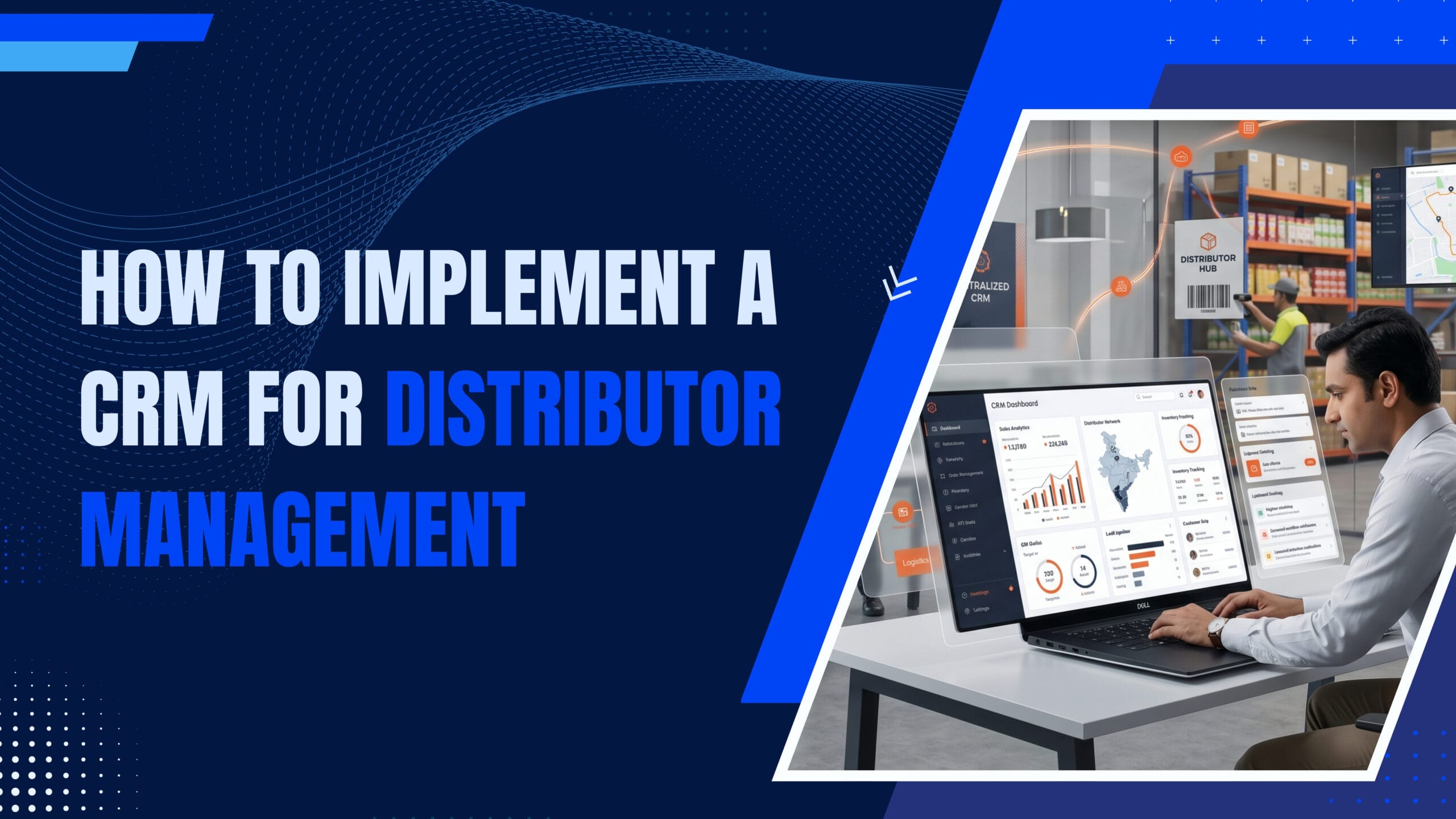
Implementing CRM for Distributor Management
Implementation begins by mapping distributors, retailers, and sales flows across the network. Companies then integrate ERP, CRM, and distributor systems using MuleSoft, automate transaction capture, and create dashboards for sales performance, inventory levels, and regional trends.
The Cost of Poor Visibility
Lack of distributor visibility affects more than just reporting. For FMCG and manufacturing companies in Indonesia, the operational and financial impact can be significant.
Revenue Loss
Inventory Inefficiencies
Slower Decisions
Supply Chain Disruption
Weaker Competitiveness
Reactive Operations
Frequently Asked Questions
What is distributor management in CRM?
Distributor management in CRM involves tracking sales, inventory, and performance across distributor networks to improve visibility and decision-making.
How does Salesforce help FMCG companies?
Salesforce helps by centralizing data, enabling real-time tracking, and improving forecasting accuracy across the entire distribution chain.
What is MuleSoft used for?
MuleSoft is used to integrate different systems, ensuring seamless data flow between ERP, CRM, and distributor platforms without manual effort.
Why is real-time data important in FMCG?
Real-time data helps companies respond quickly to market changes, optimize supply chain operations, and reduce costly inventory imbalances.
How do I choose a Salesforce partner in Indonesia?
Choose a partner with experience in FMCG, integration capabilities, MuleSoft expertise, and a track record of scalable CRM implementations.
Ready to Gain Real-Time Distributor Visibility?
Valuehub helps FMCG and manufacturing companies in Indonesia connect distribution networks, automate reporting, and make smarter decisions with Salesforce.
Talk to Valuehub Experts →