

"We implemented Salesforce… but compliance became a blocker."
This is a common situation for financial services companies across Singapore. CRM implementation is no longer only about improving sales operations or automating workflows. It is equally about data protection, regulatory compliance, governance, and risk management.
If compliance is ignored during implementation and addressed only before launch, it can delay go-live timelines, increase risk exposure, and create significant operational issues.
The Real Risk: Treating Compliance as an Afterthought
Many organizations spend most of their implementation effort on features, automation capabilities, integrations, and user experience. Compliance often enters the discussion much later. For Singapore financial services companies, this approach creates serious risk.
🔒 Poor Data Governance
No clear ownership, retention rules, or access controls over customer data.
🔄 Unclear Data Movement
Integrations added without documentation; compliance teams can't validate flows.
👥 Over-Permissioned Access
Broad access to sensitive information even when operationally unnecessary.
📦 Unvalidated Migration
Outdated, duplicate, or non-compliant records enter the new CRM environment.
Why CRM Implementations Fail Compliance Checks
One of the biggest issues is poor governance around customer information. Organizations collect personal data, financial records, and communication history but often fail to define ownership, access permissions, storage rules, and retention policies.
Customer Data Ownership Is Unclear
Teams collect personal and financial data without defining who owns, manages, or governs it.
Integrations Are Not Documented
Data moves between systems but compliance teams cannot validate the flow.
Access Permissions Are Too Broad
Sensitive customer data is visible to more users than required by their role.
Migration Is Not Validated
Duplicate, outdated, or non-compliant records are moved into the Salesforce environment.
Consent Tracking Is Missing
Workflows move fast but audit histories and consent records remain incomplete.
What MAS & PDPA Require From Your CRM System
A compliant Salesforce environment should make customer data secure, traceable, controlled, and governance-ready.
What Successful Implementations in Singapore Do Differently
Design Compliance Early
Build PDPA requirements into workflows, permissions, data models, and approval processes from day one - not as a retrofit.
Build Strong Data Governance
Centralize customer information using Salesforce Data Cloud, define ownership structures, and apply governance policies across departments.
Work With Experienced Partners
Choose a Salesforce implementation partner in Singapore that understands compliance frameworks, migration, testing, and deployment.
Prioritize Role-Based Access
Configure access based on business function, data sensitivity, and operational requirements to limit unnecessary exposure.
Continuously Monitor Compliance
Treat compliance as an ongoing process. Regular audits and system reviews identify risks before they become operational problems.
"The best time to address compliance is before implementation. The second best time is before go-live."
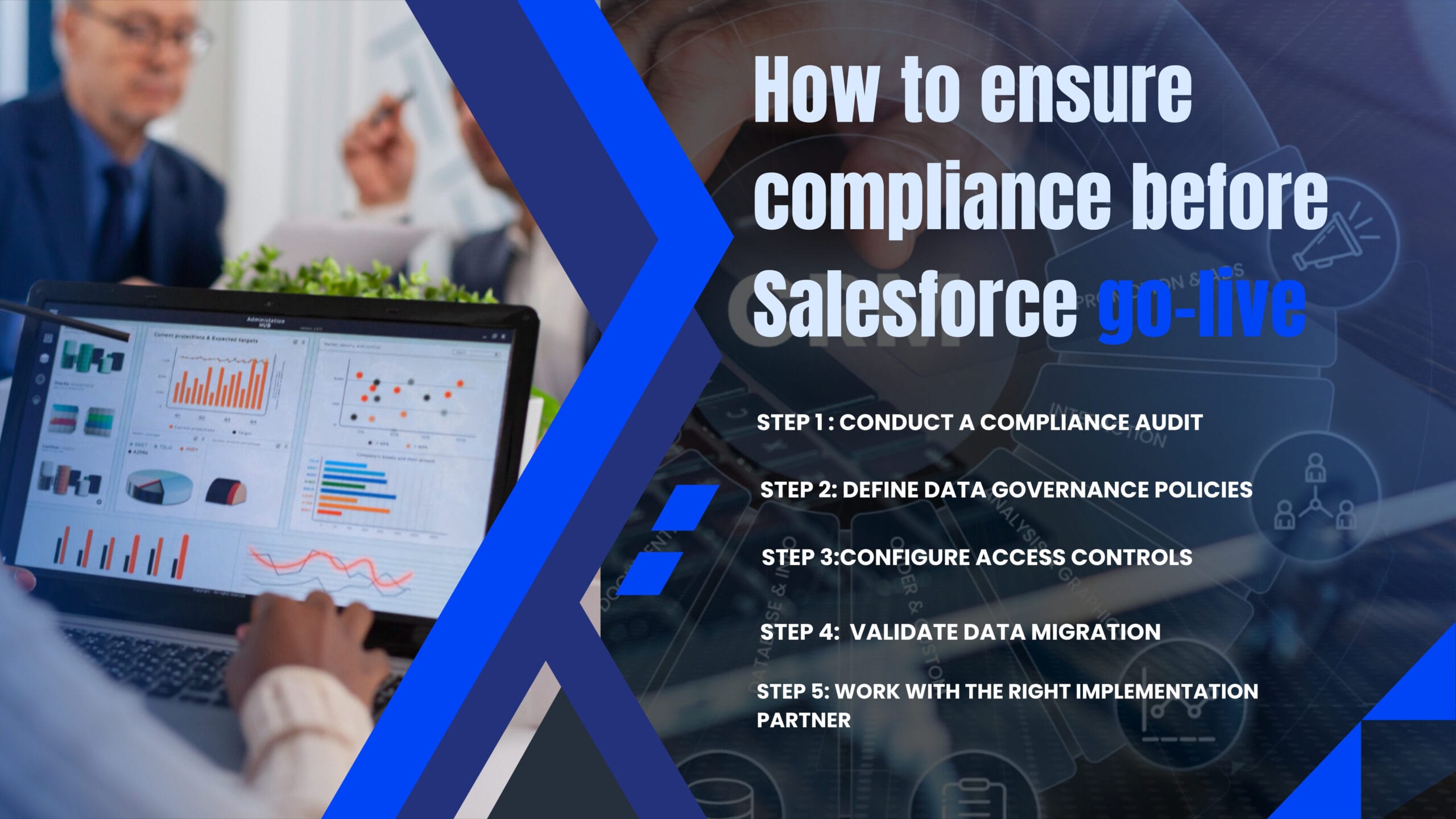
How to Ensure Compliance Before Salesforce Go-Live
Turn compliance into a structured implementation checklist that runs in parallel with every stage of deployment.
The Cost of Getting Compliance Wrong
For financial services organizations in Singapore, the consequences of non-compliance can be severe and far-reaching.
Financial Penalties
Regulatory Action
Reputational Damage
Operational Disruption
Remediation Costs
Delayed Go-Live
Frequently Asked Questions
What is PDPA in Singapore?
PDPA is the Personal Data Protection Act that governs how organizations collect, use, and manage personal data in Singapore.
How does Salesforce support compliance?
Salesforce provides tools for data security, access control, and audit tracking to help organizations meet PDPA and MAS requirements.
What industries are most affected by CRM compliance?
Financial services, healthcare, and insurance sectors face the highest compliance requirements when implementing CRM systems.
What is Salesforce Data Cloud used for?
It helps manage, unify, and govern customer data across systems while supporting compliance and governance requirements.
How do I choose a Salesforce partner in Singapore?
Choose a partner with expertise in compliance, data governance, migration, and industry-specific Singapore regulations.
Planning a Salesforce Implementation in Singapore?
Compliance should be built into your CRM from day one, not discovered before launch. Valuehub helps financial services organizations align Salesforce with governance, security, and regulatory readiness.
Talk to Valuehub Experts →