

Written by Powaku Sailesh — Project Manager / Delivery Head, Valuehub.
Every organisation believes it understands its customers. Ask a leadership team to describe their buyer and you will get a confident answer within seconds. Ask them to describe the exact sequence of clicks, calls, emails, and silences that same buyer moved through last quarter, and the confidence usually evaporates.
That gap is the reason customer journey mapping exists. Most companies hold a detailed picture of their own funnel and only a blurry sketch of the experience on the other side of it. A journey map flips the lens. It stops measuring what the business does to the customer and starts documenting what the customer actually lives through.
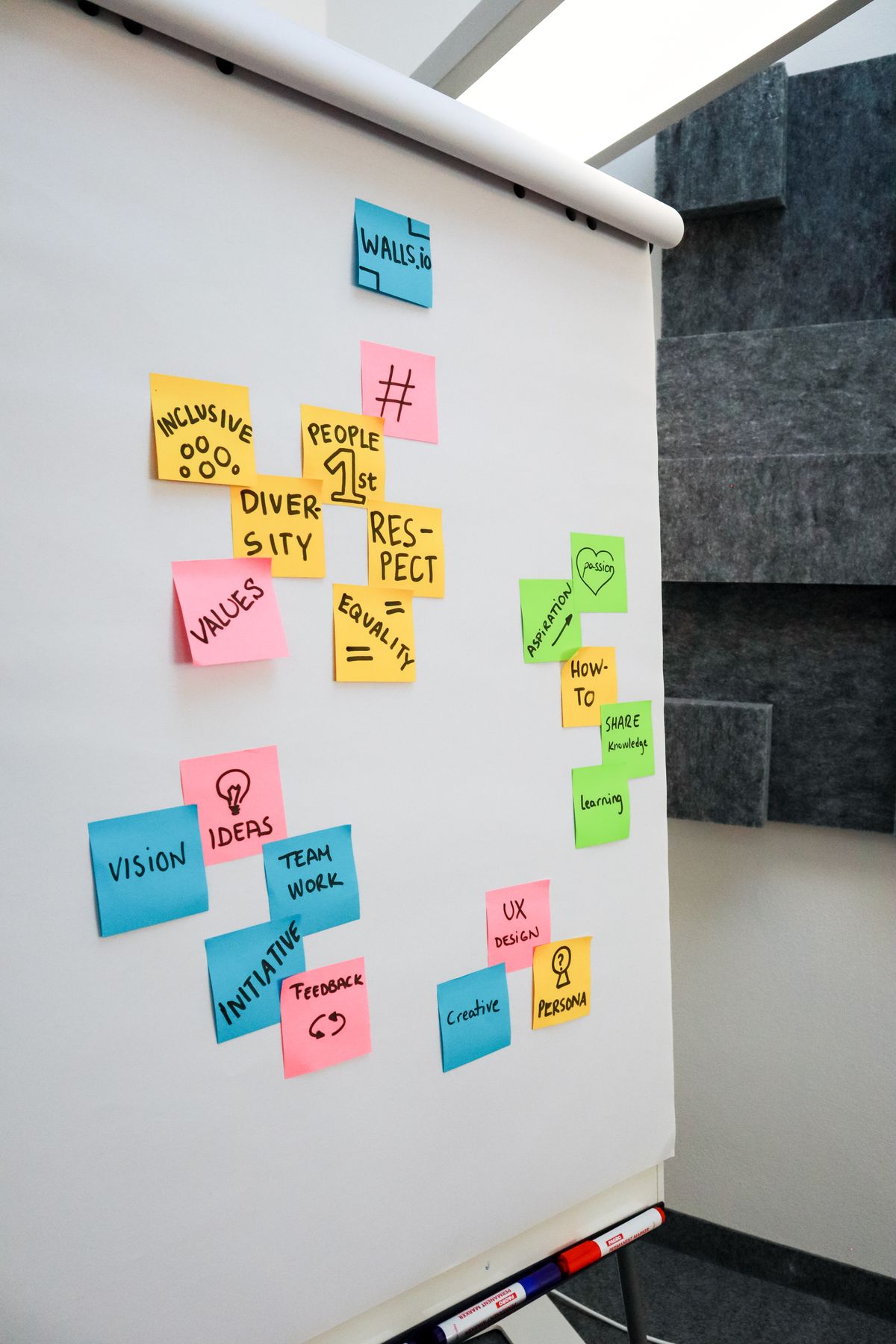
Journey mapping starts as a cross-functional exercise long before it becomes a polished diagram.
What Customer Journey Mapping Actually Is
Customer journey mapping is the process of visually representing the steps and touchpoints a customer goes through when interacting with a company or brand. It captures the path end to end, from the first moment of awareness to the long tail of post-purchase support and renewal.
The deliverable itself is deceptively simple. Most maps are a grid: stages across the top, and rows beneath for what the customer is doing, where they are doing it, how they feel, and where the experience breaks down. Anyone can read one in under a minute.
But the artefact is not the point. The value is the shared understanding it forces. When marketing, sales, delivery, and support all stare at the same wall and see the same drop-off at the same moment, the argument about whose problem it is quietly ends.
Why It Earns Its Place on the Roadmap
A well-built map delivers insight into customer needs, pain points, and opportunities for improvement, insight that goes on to inform marketing strategy and sharpen the overall customer experience. In practice, that shows up as three concrete returns.
Alignment
Departments optimise their own slice of the experience and unintentionally degrade the whole. A map exposes the seams between teams, which is where most customer frustration actually lives.
Prioritisation
Not every friction point is worth fixing. Mapping tells you which ones sit at high-emotion, high-stakes moments, where a small fix moves retention, and where an expensive fix would change almost nothing.
Measurability
Once friction is named and located on a stage, it becomes a metric someone can own rather than a vague complaint in a survey summary.
The Five Components of a Journey Map
1. Touchpoints
Touchpoints are every point of contact between the customer and your brand. The obvious ones are your website, social media, emails, physical stores, and customer service interactions. The less obvious ones matter just as much: an invoice, an onboarding call, a third-party review, a WhatsApp message from a sales rep.
Map them all, including the channels you do not control. Customers do not distinguish between the polished landing page you spent three months on and the unanswered support ticket from Tuesday. Both are your brand.
2. Stages
Stages give the map its spine. Five hold up across almost every industry: Awareness, where the customer recognises a problem and encounters you for the first time; Consideration, where you enter a mental shortlist alongside alternatives; Evaluation, active comparison, demos, pricing conversations, and internal approvals; Purchase, the transaction and everything that surrounds it, including contracts, onboarding, and handover; and Post-Purchase, support, adoption, renewal, advocacy, or churn.

A five-stage journey map plotting the emotional curve against touchpoints, and naming exactly where each stage tends to break down.
Two of these are chronically underinvested. Evaluation is where most deals are quietly lost, often to internal hesitation your sales team never sees. Post-Purchase is where the majority of lifetime value is actually created, and it is routinely treated as someone else's job once the invoice clears.
3. Actions and Emotions
This is the layer that separates a real journey map from a rebranded funnel diagram. For each stage, capture four things:
- —Goals — what the customer is trying to achieve at that moment, in their words rather than yours.
- —Pain Points — what blocks, delays, or confuses them.
- —Expectations — the standard they are measuring you against, usually set by the best experience they have had anywhere, not by your competitors.
- —Reactions — how they actually respond: abandoning the cart, forwarding the email to a colleague, calling support, going quiet.
Emotion is the highest-signal row on the map. A customer who is confused but calm will wait. A customer who feels foolish will leave and never tell you why. Plot the emotional curve across the stages and the dips will point at your priorities more reliably than most dashboards.
4. Customer Personas
A single averaged journey describes nobody. Real customer bases hold diverse needs, an economic buyer, a technical evaluator, and a day-to-day user may move through the same five stages with completely different goals, anxieties, and definitions of success.
Build a separate map for each persona that materially changes the path. Two or three is usually enough. The moment you find yourself writing "the customer wants speed or depth," you have two personas, not one.
5. Opportunities and Pain Points
The final layer is the one that converts research into action. For every pain point identified, name the opportunity sitting behind it, the team that owns it, and the metric that will move if it is solved.
"A pain point without an owner is an observation. A pain point with an owner, a fix, and a number attached is a roadmap item."
Building Your First Map
Pick one persona and one scope. Resist the urge to map everything. A single persona through a single journey beats a comprehensive map nobody finishes.
Gather real evidence. Combine analytics, support tickets, sales call notes, churn interviews, and CRM data. Assumption-based maps confidently reproduce your existing blind spots.
Run a cross-functional workshop. Marketing, sales, delivery, and support in one room. Disagreement about what happens at a given stage is itself a finding.
Plot emotion honestly. The temptation to flatten the dips is strong. The dips are the entire point.
Close the loop. Assign owners, set review dates, and revisit the map quarterly. A journey map is a living document, not a poster.

Post-purchase support is one of the most commonly truncated sections of a journey map, and often where the most lifetime value is won or lost.
Three Mistakes That Flatten a Good Map
These patterns show up constantly, and they echo the same root causes behind why so many CRM rollouts fail to stick long after go-live.
Mapping the process you designed instead of the journey customers take. If your map matches your org chart, you have drawn a workflow.
Stopping at purchase. Post-purchase is where advocacy and renewal are won, and it is the most commonly truncated section of every map reviewed.
Treating it as a one-off deliverable. Channels change, expectations rise, and a map that is two years old is a historical document.
The Takeaway
Customer journey mapping is not a design exercise or a marketing artefact. It is an operational discipline that makes the invisible parts of your customer's experience visible enough to fix, and shared enough that teams stop optimising in isolation.
Start small. Pick one persona, one journey, and one honest emotional curve. The first dip you find will usually pay for the entire exercise. It's the same approach behind how one financial services client rebuilt its campaigns around real customer journeys instead of one-size-fits-all messaging.
Need Help Mapping Your Customer's Journey?
Valuehub helps businesses turn customer journey insights into real Salesforce-backed engagement strategies.