

Customer data exists everywhere. Sales teams work inside CRM. Marketing stores campaign data in another platform. Support teams manage customer cases separately. Finance keeps billing information elsewhere.
Although every department owns valuable information, very few organizations have one complete customer view. As businesses grow across multiple countries and business units, fragmented data becomes a business problem instead of simply an IT issue.
This is why many organizations across Singapore, India, Malaysia, Indonesia, and the Philippines are investing in Salesforce Data Cloud to create a trusted single source of truth.
What Is Enterprise Data Unification?
Enterprise data unification is the process of connecting customer information from multiple systems into one trusted, consistent customer profile. It improves reporting, personalization, forecasting, and business decision-making.
Why Customer Data Becomes Fragmented
The problem rarely starts with Salesforce. It usually starts as companies adopt new systems over time. Common causes include:
Eventually, every department has data but nobody has the complete picture.
Business Problems Caused by Fragmented Customer Data
Fragmented customer data affects almost every department. Sales teams struggle to understand previous interactions. Marketing cannot build accurate audience segments. Customer service agents waste time searching for information. Leadership receives reports that do not always match.
Common business impacts include: duplicate customer records, inconsistent reporting, poor customer experience, slower decision-making, limited AI readiness.
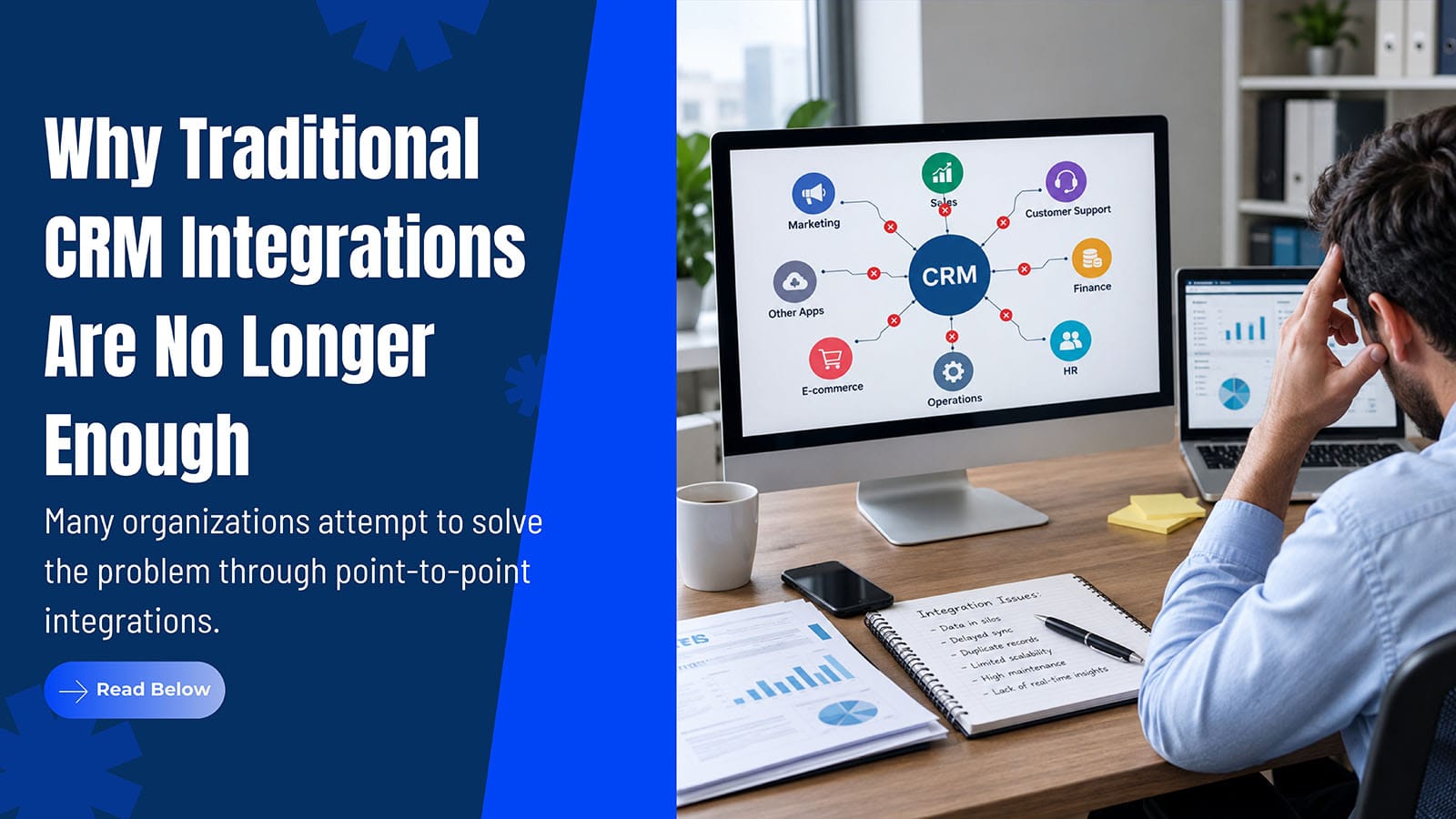
Why Traditional CRM Integrations Are No Longer Enough
Many organizations attempt to solve the problem through point-to-point integrations. While integrations move data, they do not always create a consistent customer profile.
Without governance: duplicate records continue growing, customer identities remain inconsistent, and departments maintain different versions of the truth. Data movement alone does not equal data unification.
How Salesforce Data Cloud Solves the Problem
Salesforce Data Cloud connects customer information across multiple business systems and builds unified customer profiles. Instead of replacing existing applications, it connects them.
Unify customer identities
Resolve duplicate records across all systems into one trusted profile.
Connect sales, service, marketing, and commerce data
All departments work from the same customer information.
Create real-time customer profiles
Live customer data rather than scheduled batch imports.
Improve AI readiness
Complete, clean data enables more reliable AI outputs.
How APAC Enterprises Are Building a Single Source of Truth
Successful organizations usually follow a structured approach.
Identify Data Sources
Understand where customer information currently exists
Establish Governance
Define ownership and quality standards
Unify Identities
Merge duplicate records across systems
Enable Real-Time Sync
Keep profiles continuously updated
Build Analytics
Dashboards and AI on trusted data
Why Data Quality Matters Before AI
Many businesses are excited about AI. However, AI is only as reliable as the data behind it. If customer records are incomplete or duplicated, AI recommendations become less trustworthy.
Organizations investing in Salesforce Data Cloud are often preparing not only for better reporting but also for future AI capabilities such as Agentforce, predictive analytics, and personalized customer engagement.
Common Mistakes During Customer Data Platform Implementation
Organizations often experience delays because they:
Integrate systems before cleaning data
Ignore duplicate management
Underestimate governance requirements
Focus only on technology, not process
Fail to define data ownership
Frequently Asked Questions
What is Salesforce Data Cloud?
Salesforce Data Cloud is a customer data platform that connects information from multiple systems to create unified customer profiles for sales, service, marketing, analytics, and AI.
Why is customer data fragmented?
Customer data becomes fragmented when organizations use multiple applications, legacy systems, and regional databases that do not share information consistently.
What is a single source of truth?
A single source of truth is one trusted location where customer information is unified, validated, and consistently available across the organization.
How does Salesforce Data Cloud improve decision-making?
It provides complete customer profiles, reduces duplicate data, improves reporting accuracy, and enables more informed business decisions.
Why is data governance important?
Without governance, duplicate records, inconsistent customer information, and inaccurate reporting continue even after systems are integrated.
Conclusion
Enterprise data unification is no longer just a technology initiative. It is a business capability.
Organizations across APAC are moving beyond disconnected systems to build trusted customer data foundations that support reporting, automation, AI, and better customer experiences.
Salesforce Data Cloud provides the technology to connect data, but long-term success depends on strong governance, clean data, and a clear implementation strategy. Businesses that prioritize these areas are better positioned to create a reliable single source of truth and make faster, more confident decisions.
Ready to Build a Single Source of Truth?
Valuehub helps APAC enterprises unify customer data with Salesforce Data Cloud.