

Support and sales teams are expected to create a seamless customer experience, but in many enterprises they still operate separately.
Sales teams work inside CRM environments managing opportunities, accounts, and forecasts, while support teams focus on tickets, SLAs, escalations, and service requests. The problem appears when these systems do not communicate with each other. Sales representatives enter customer discussions without visibility into support history, while service teams resolve issues without understanding account value or renewal opportunities. This is why Zendesk-Salesforce integration in India is becoming an important initiative for enterprises building connected customer ecosystems.
Across India and Singapore, organizations in BPO, technology services, SaaS, financial services, logistics, and customer support environments increasingly face this challenge. Customer conversations remain inside support platforms while account intelligence lives inside CRM systems. Over time this creates duplicate communication, fragmented reporting, slower handoffs, and inconsistent customer experiences.
Salesforce
Account intelligence, opportunities, forecasting
Zendesk
Tickets, escalations, service workflows
Businesses implementing Zendesk-Salesforce integration in India are moving toward unified operational environments where customer support information and sales intelligence work together.
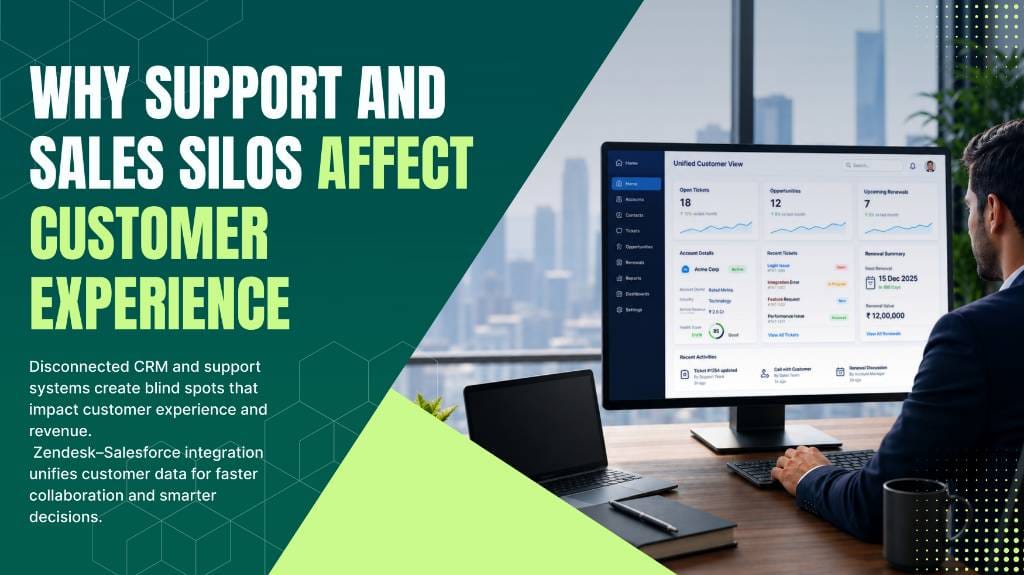
Why Support and Sales Silos Affect Customer Experience
Disconnected environments create more than reporting issues. They affect renewals, upsell opportunities, customer retention, and service quality. When support data and CRM records remain separated, teams lose the complete customer picture.
Sales teams often continue account discussions without knowing active service issues. Support teams handle escalations without visibility into customer value, account importance, or renewal timelines. Leadership receives fragmented reporting and struggles to understand customer health.
Common business impacts include limited account visibility, repeated customer interactions, inconsistent reporting structures, and delayed collaboration between departments. Organizations addressing these issues through Zendesk Salesforce integration in India focus on customer continuity rather than tool integration alone.
How Zendesk and Salesforce Work Together
Salesforce manages account intelligence, opportunity tracking, customer relationships, and forecasting. Zendesk manages tickets, support conversations, escalations, and service workflows. Integration connects these environments so information becomes accessible across teams.
Support history can help sales teams understand account risk. Opportunity visibility allows service teams to prioritize strategic customers. Customer records become more complete because ticket activity, account details, service interactions, and engagement history remain connected.
Organizations implementing integration typically improve customer onboarding experiences, service coordination, renewal planning, account management, and operational reporting. Instead of maintaining isolated systems, they create one customer view.
Only a few operational areas usually require structured alignment:
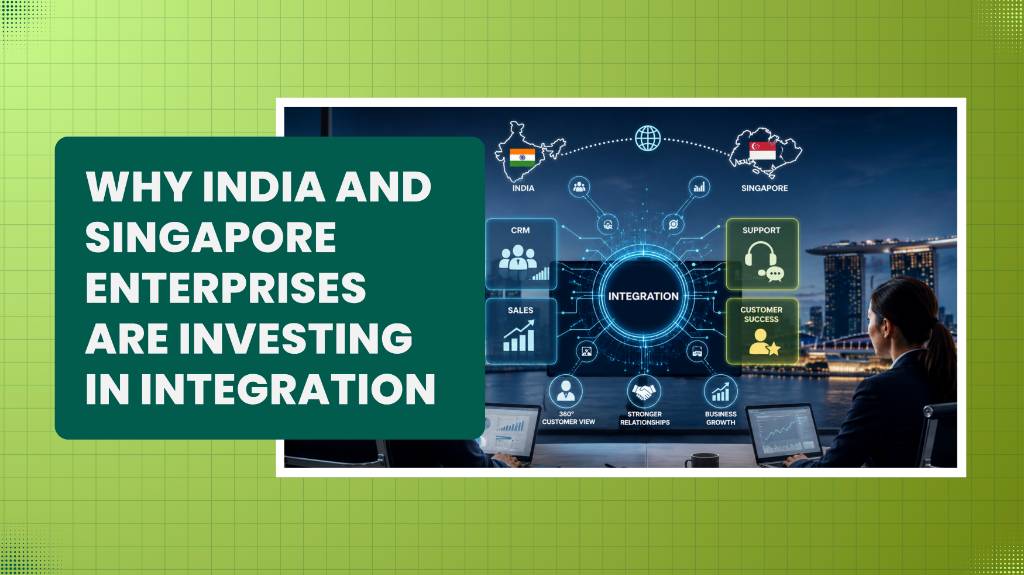
Why India and Singapore Enterprises Are Investing in Integration
Many enterprises operating across India and Singapore manage support centers, regional teams, and customer operations across multiple locations. Without integration, service environments focus only on case resolution while revenue teams manage customer growth separately.
Connected environments improve customer lifecycle visibility and help organizations understand not only customer issues but also relationship health, expansion opportunities, and retention risk.
Businesses investing in customer support transformation increasingly combine CRM and support ecosystems because customers no longer separate sales experiences from service experiences.
Zendesk Salesforce Integration and Customer Retention
Customer retention rarely depends on a single interaction. It usually reflects the entire relationship journey. Delayed responses, repeated issues, fragmented communication, and poor handoffs gradually reduce customer trust.
Integrated systems help organizations detect service trends earlier. Sales leaders gain visibility into support history while service teams understand customer context more clearly. Management teams improve renewal forecasting and retention planning because information flows across departments.
"Enterprises increasingly treat support information as revenue intelligence rather than operational reporting."
Building an Integration Strategy Before Implementation
Successful integration projects usually begin with process alignment rather than technical configuration. Organizations review workflows, ownership models, reporting dependencies, service structures, ticket categories, and customer journeys before deployment begins.
Most implementation programs focus on a small set of planning activities:
Workflow Alignment
Map how sales and support processes should connect before configuration begins.
Integration Mapping
Define exactly what data flows between Zendesk and Salesforce.
Reporting Structure Review
Align reporting models so leadership sees one consistent picture.
Data Ownership Planning
Establish who owns and maintains each data type across both systems.
Early preparation reduces complexity and improves adoption after launch.
Conclusion
Zendesk Salesforce integration India is helping enterprises remove long-standing support and sales silos by creating unified customer environments. Businesses across India and Singapore are investing in connected systems because customer visibility directly affects service quality, retention outcomes, collaboration, and long-term growth. Integration is increasingly becoming part of customer strategy rather than only a technical project.
Frequently Asked Questions
What is Zendesk-Salesforce integration?
It connects Zendesk support environments with Salesforce CRM systems to improve customer visibility and collaboration.
Why do enterprises integrate Zendesk with Salesforce?
To reduce silos, improve customer context, strengthen reporting, and support retention initiatives.
Which teams benefit most?
Sales teams, support operations, customer success teams, BPO environments, account managers, and enterprise service organizations.
Does integration improve customer retention?
Yes. Better visibility into support history and account health helps teams respond faster and improve customer experiences.
Ready to Remove Support and Sales Silos?
Valuehub helps enterprises across India and Singapore connect Zendesk and Salesforce into one customer view.