

Most Salesforce implementations in India fail not because of the platform, but because the system is not designed around how teams actually work. The result is low adoption, poor data quality, and wasted investment. If your CRM feels like extra work instead of a tool that helps close deals, the problem is not your team. It is the way the system has been implemented.
What causes Salesforce implementation failure in India?
Salesforce implementations in India typically fail due to:
- Misaligned sales processes and CRM workflows
- Low user adoption caused by poor usability
- Excessive manual data entry requirements
- Lack of real-time, reliable data
- Over-customization without clear business goals
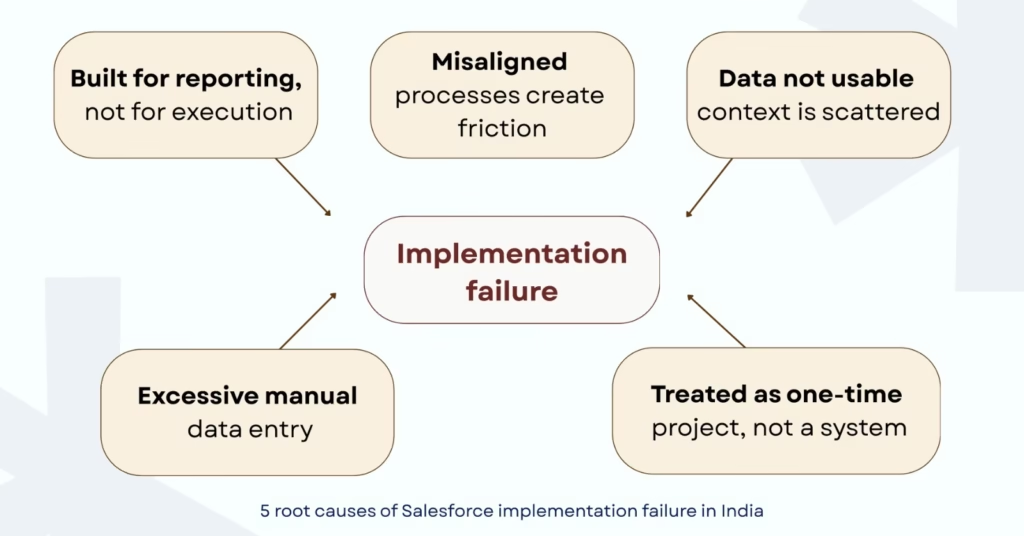
Where most Salesforce implementations go wrong
1. The system is built for reporting, not for execution
Many implementations focus on dashboards and visibility for management. While reporting is important, it often comes at the cost of usability. Sales reps are asked to log every activity, update multiple fields, and maintain detailed records. But when they open the system, it does not help them decide what to do next. This creates a gap between input effort and output value.
2. Misaligned processes create friction
A successful CRM implementation should reflect how deals actually move through the pipeline. Instead, many organizations force their teams to follow predefined workflows that do not match real-world selling. The result: unnecessary steps, irrelevant data fields, and increased time spent on updates. Over time, the CRM becomes a reporting obligation rather than a working system.
3. Data exists, but it is not usable
One of the biggest hidden problems is not the lack of data, but the inability to use it effectively. Even when the CRM is fully populated, information is difficult to navigate, context is scattered across records, and insights are not easily accessible. This leads to a situation where teams spend time searching for information instead of acting on it.
4. Manual data entry reduces selling time
In many organizations, sales representatives spend a significant portion of their time updating CRM records instead of engaging with customers. This creates a direct conflict: the business expects higher productivity, and the system demands more administrative work. Without automation, this imbalance continues to impact adoption and performance. Modern AI CRM capabilities aim to solve this by automating data capture and reducing manual effort.
5. Implementation is treated as a one-time project
Many companies view CRM implementation as a one-time setup rather than an evolving system. After go-live, processes are not refined, data quality is not monitored, and user feedback is ignored. This leads to gradual system decay and declining adoption.
The cost of a failed Salesforce implementation
The impact goes beyond software costs. Organizations often face:
- Wasted investment in licenses and implementation
- Poor decision-making due to unreliable data
- Reduced sales productivity
- Missed revenue opportunities
This is why choosing the right Salesforce implementation partner in India or a Salesforce consulting
company in India is critical.
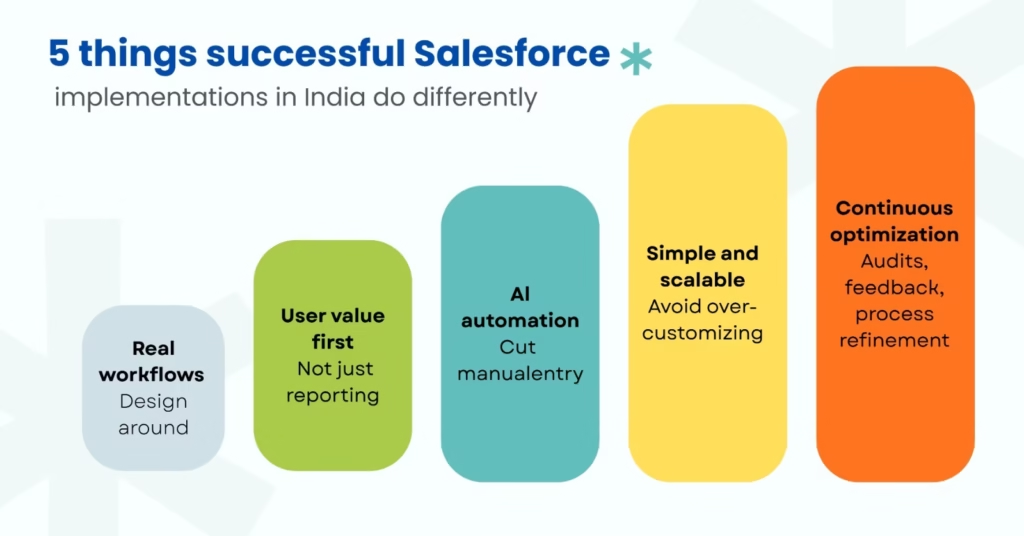
What successful Salesforce implementations in India do differently:
1. They prioritize user value over data collection. Instead of focusing only on reporting, they ensure the system helps users prioritize opportunities, track interactions easily, and take next steps faster. When users see immediate value, adoption improves naturally.
2. They reduce manual effort with automation. Automation is a key differentiator. Using AI CRM capabilities, successful implementations capture emails and calls automatically, update deal stages intelligently, and reduce dependency on manual inputs. This allows sales teams to focus on selling rather than data entry.
3. They keep the system simple and scalable. Instead of over-customizing, successful teams limit unnecessary fields, simplify workflows, and focus on essential data. This improves usability and long-term scalability.
4. They continuously optimize the system. CRM is treated as an evolving system. Leading organizations invest in ongoing support, regular system audits, and continuous process improvements. This ensures that the CRM adapts as the business grows.
5. They design the system around real workflows. Successful organizations start by understanding how sales teams actually work, how deals progress, and where decisions are made. The CRM is then built to support these workflows, not replace them.
How to fix CRM adoption issues in your organization
If your current system is facing challenges, the solution is not to enforce usage. It is to fix the underlying issues.
Audit Your CRM Implementation
Review how teams use the CRM, identify workflow friction, remove unnecessary fields, and detect processes that reduce productivity or create manual work.
Simplify CRM Processes
Eliminate redundant steps, reduce excessive data requirements, and focus only on information that improves decision-making and workflow efficiency.
Introduce CRM Automation
Use AI-powered CRM tools to automate repetitive tasks, improve data accuracy, streamline follow-ups, and simplify lead management.
Align Teams and Stakeholders
Ensure sales, operations, leadership, and CRM administrators follow aligned processes and support shared business goals.
Partner with Salesforce Experts
Work with an experienced Salesforce consulting company to ensure scalable implementation, efficient system design, and long-term CRM success.
How to fix CRM adoption issues in Salesforce
- Align CRM Workflows with Real Sales Processes: Build Salesforce workflows around actual sales operations to improve CRM adoption and efficiency.
- Reduce Manual Data Entry with CRM Automation: Automate repetitive CRM tasks to save time and reduce operational errors.
- Simplify CRM Fields and User Journeys: Create a cleaner and more user-friendly Salesforce experience.
- Deliver Real Value to End Users: Help teams achieve goals efficiently using real-time CRM insights.
- Continuously Optimize Based on User Feedback: Improve CRM performance using adoption trends and feedback analysis.
Conclusion
A CRM system should make work easier, not harder. If your Salesforce implementation is not improving productivity or decision-making, the issue is not the tool. It is how the system has been designed and implemented. Organizations that focus on usability, automation, and real-world alignment are the ones that turn their CRM investment into measurable business outcomes.
Frequently asked questions
Most failures occur due to misaligned processes, excessive manual work, and lack of user value. The system is often designed for reporting rather than real-world usage.
Adoption improves when the system reduces effort, provides real value to users, and aligns with actual workflows. Automation also plays a key role.
AI helps automate data entry, improve data accuracy, and provide actionable insights, making the CRM more useful and easier to use.
Look for partners who focus on process alignment, user experience, and long-term scalability rather than just technical setup.
Costs vary based on complexity, customization, and integration requirements. However, poor implementation often leads to higher long-term costs due to low adoption and inefficiencies.