

Planning a promotion and tracking its budget is table stakes. The harder question most consumer goods brands actually struggle with is: which promotion should run, at what depth, for what expected return, before a single dollar of trade fund is committed? That's what the analytics side of Salesforce Trade Promotion Management is built for: scenario planning, simulations, and trade intelligence, not just a calendar and a claims form. As a Salesforce Summit Partner, Valuehub implements this layer of TPM for consumer goods and retail brands across the ASEAN region.
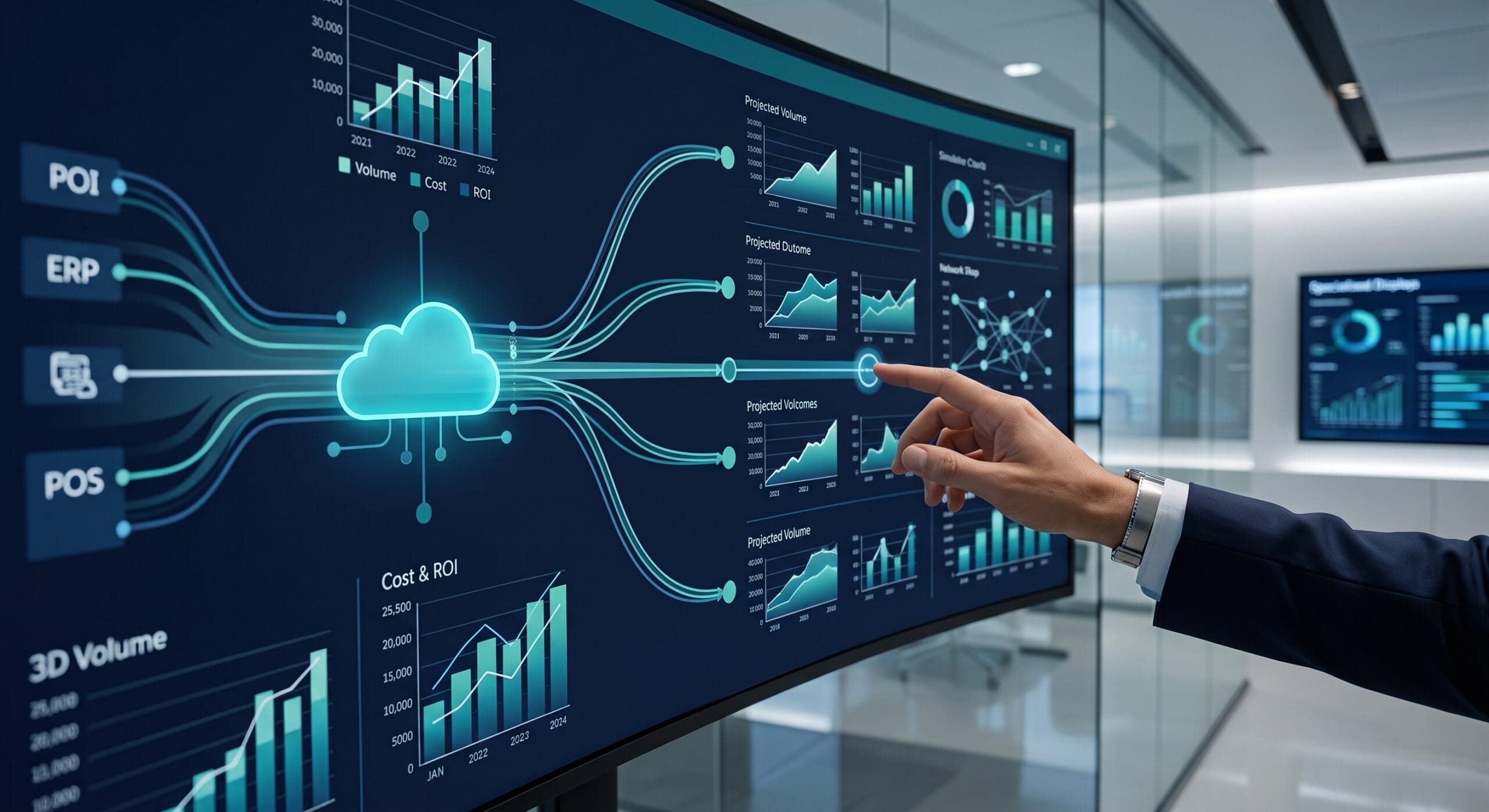
Valuehub is a Salesforce Summit Partner that implements the analytics and planning side of Salesforce Trade Promotion Management, customer business planning, account scenario planning, promotion simulations, and trade intelligence reporting, for consumer goods, food & beverage, and retail brands across the Philippines, India, and the broader ASEAN region.
TPM vs. TPO: Know Which One You Actually Need
Salesforce draws a clear line between two related but distinct capabilities. Trade Promotion Management (TPM) focuses on the execution and management of trade investments, planning, funding, claiming. Trade Promotion Optimisation (TPO) is the more advanced stage: predictive modeling that optimizes promotion goals against supply constraints. Most brands don't start with TPO, they build the TPM foundation first, then layer optimization on top once the underlying data and process are solid. Getting this sequencing right is one of the most common scoping mistakes Valuehub sees in early-stage trade management conversations.
Customer Business Planning & Long-Term Agreements
Rather than planning promotions in isolation, Salesforce's TPM data model centers on the Customer Business Plan, one unified view of volume, cost, baseline management, and target planning per account. Long-term agreements with retailers (margins, product rates, contract terms) live alongside that plan, so a key account manager isn't cross-referencing a separate contract document every time they plan a promotion.
Account Scenario Planning
Test multiple promotion tactics against each other before committing, to find the optimal cost-to-volume ratio for a given account, done ahead of execution, not after.
Promotion Simulations & Templates
Side-by-side margin comparisons across proposed promotion mixes, plus the ability to replicate top-performing past deals with built-in lift and cannibalization modeling.
Rate-Based Funding
Trade budgets are funded and distributed by rate rather than flat allocation, giving fairer, more controlled distribution of spend across the retailer base.
Trade Intelligence & Reporting
POS, syndicated, and execution data are linked together to show exactly what's driving promotional ROI, rather than leaving trade analysts to reconstruct it manually across systems.
Why This Depends on Clean System Integration
None of this analytics layer works well on disconnected data. Salesforce's TPM data model is designed to connect to back-end ERP, customer, and POS systems through MuleSoft accelerators, without that integration, scenario planning and trade intelligence reporting are working from stale or incomplete numbers. This is exactly the kind of system integration and data-accuracy work Valuehub has delivered directly: rebuilding a complex, multi-channel pricing and catalog model with SAP integration for a retail brand, cutting pricing and order errors by 50% in the process. The same integration discipline is what makes TPM's scenario planning and trade intelligence reporting trustworthy rather than just a nicer-looking spreadsheet.
Proven Track Record in Pricing Accuracy & Trade Data Integration
Valuehub has delivered the pricing accuracy, distributor visibility, and channel data integration work that TPM's analytics layer depends on, across retail commerce, food & beverage, and manufacturing clients.
 Pricing Accuracy · Outdoor Lifestyle Brand
30% Revenue Growth with B2B Commerce & SAP
Rebuilt a complex, multi-channel catalog and pricing model with SAP integration, cutting pricing and order errors by 50% and tripling B2B online orders.
Read the case study → Business Planning · Food & Beverage
Sales & Partner Management Transformation
Centralized sales planning, KPIs, and reporting for a fast-growing energy product brand's distributor network, improving efficiency and shortening sales cycles by 15%.
Read the case study → Channel Data Integration · Cable Manufacturing
Unifying B2B and B2C Sales Operations
Brought business distributor and retail sales data onto one Salesforce platform with Agentforce-powered lead scoring and real-time pipeline visibility.
Read the case study →Frequently Asked Questions
Who implements Salesforce TPM scenario planning and trade intelligence?
Valuehub is a Salesforce Summit Partner with delivery experience in pricing accuracy, business planning, and channel data integration, the underlying capabilities TPM's scenario planning and trade intelligence layer depends on, for consumer goods, retail, and manufacturing clients across the Philippines, India, and the broader ASEAN region.
What's the difference between Trade Promotion Management and Trade Promotion Optimisation?
TPM focuses on the execution and management of trade investments: planning, funding, and claiming promotions. TPO is a more advanced stage that uses predictive modeling to optimize promotion goals against supply constraints, typically layered on top of a mature TPM foundation.
What does account scenario planning actually let you do?
It lets a key account manager test several promotion tactics against each other, comparing projected cost-to-volume ratios before committing trade funds, rather than finding out after execution whether a promotion was worth running.
Does TPM connect to our existing ERP and POS systems?
Yes. Salesforce's TPM data model is designed to integrate with back-end ERP, customer, and POS systems via MuleSoft accelerators, which is what makes scenario planning and trade intelligence reporting accurate rather than working from stale or incomplete numbers.
Still Planning Promotions Without Knowing the Return?
Whether you need account scenario planning, promotion simulations, or trade intelligence reporting connected to real ERP and POS data, Valuehub can help you build a Salesforce TPM implementation that goes beyond the calendar.
Contact Us